This page may be viewed in:
The third season of cleanup construction for the upper reach is underway!
What’s happening now:
October 2026 update
LDWG has begun the third season of construction in the upper reach of the waterway to remove contaminated sediment. To protect certain fish species, in-water construction will occur October 2026 through February 2027.
This season, the construction contractor, Pacific Pile and Marine, will be dredging contaminated sediment near parks and homes in South Park. The community can expect multiple barges and equipment working on the water, lights for safe work during dark hours, and typical construction equipment noise. Season 3 construction hours will be during both daytime and nighttime, Monday – Saturday. Hours will vary depending on the tides and the type of work being done.
We do not expect this season’s construction work to require extended South Park Bridge closures. Extended bridge closures are when the bridge is closed to people driving, walking, or biking for a longer duration than what is needed for routine bridge openings for vessel passage.
At one cleanup area, SMA 5, which is near Raisbeck Aviation High School and the Aviation Pavilion, cleanup work will be done from private property on land, instead of from the water. When work happens at SMA 5, there may be short periods during the day with limited access to a part of the public sidewalk directly adjacent to the cleanup work area. This is to keep the public and crew safe. Cleanup at SMA 5 will include night work.
What to Expect During the Week of October 5
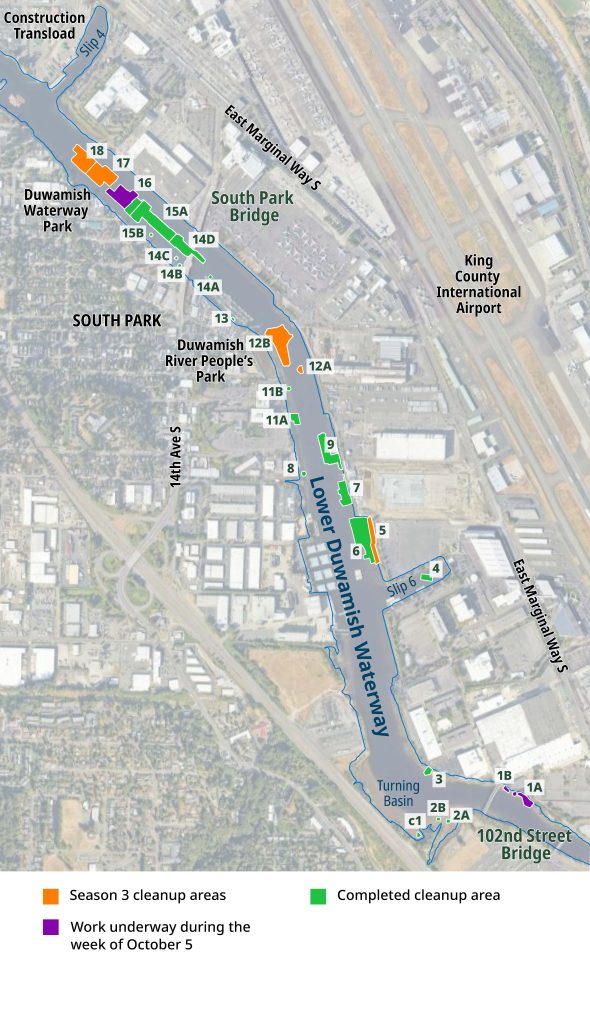
During the week of October 5, crews will begin dredging at sediment management area (SMA) 16 and at SMAs 1A and 1B (see cleanup map linked below). Work may begin as early as 6 a.m., Monday through Saturday.
What to Expect During the Week of October 12
During the week of October 12, crews will continue dredging at SMA 16 and at SMAs 1A and 1B. Work is expected to begin as early as 3 a.m., Monday through Saturday. The early start times are needed to work around tides at SMAs 1A and 1B and to coordinate crew schedules.
Follow along with weekly construction updates by signing up for LDWG’s Email Newsletter.
Read the Season 3 Construction Handout: English | Spanish | Khmer | Vietnamese
You can reach out to our team should you have questions or concerns. Reach out to us at info@ldwg.org or 1-888-561-LDWG (1-888-561-5394).
Environmental and Community Reporting:
Stay Connected:
Season 3
September 25, 2026 Newsletter
September 14, 2026 Newsletter
Season 2
April 7, 2026 Newsletter
February 27, 2026 Newsletter
February 20, 2026 Newsletter
February 13, 2026 Newsletter
February 6, 2026 Newsletter
January 30, 2026 Newsletter
January 23, 2026 Newsletter
January 16, 2026 Newsletter
January 9, 2026 Newsletter
January 5, 2026 Newsletter
December 29, 2025 Newsletter
December 19, 2025 Newsletter
December 12, 2025 Newsletter
December 5, 2025 Newsletter
December 1, 2025 Newsletter
November 21, 2025 Newsletter
November 14, 2025 Newsletter
November 7, 2025 Newsletter
October 31, 2025 Newsletter
October 24, 2025 Newsletter
October 17, 2025 Newsletter
October 10, 2025 Newsletter
October 6, 2025 Newsletter
September 30, 2025 Newsletter
September 17, 2025 Newsletter
Season 1
March 7, 2025 Newsletter
February 28, 2025 Newsletter
February 21, 2025 Newsletter
February 14, 2025 Newsletter
February 7, 2025 Newsletter
January 31, 2025 Newsletter
January 24, 2025 Newsletter
January 17, 2025 Newsletter
January 10, 2025 Newsletter
January 3, 2025 Newsletter
December 27, 2024 Newsletter
December 20, 2024 Newsletter
December 13, 2024 Newsletter
December 6, 2024 Newsletter
November 21, 2024 Newsletter
Lower Duwamish Waterway Upper Reach Cleanup Areas
As of October 2, 2026
What to Expect During Construction
Construction will take place in specific areas within the waterway’s upper reach, which extends from the South 102nd Street bridge downstream to the Duwamish Waterway Park.
In general, the public can expect to see:
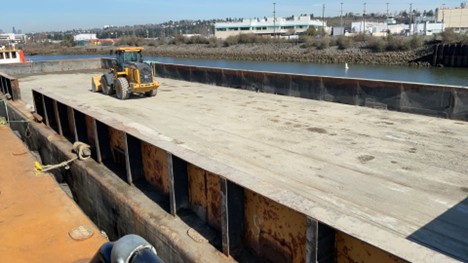
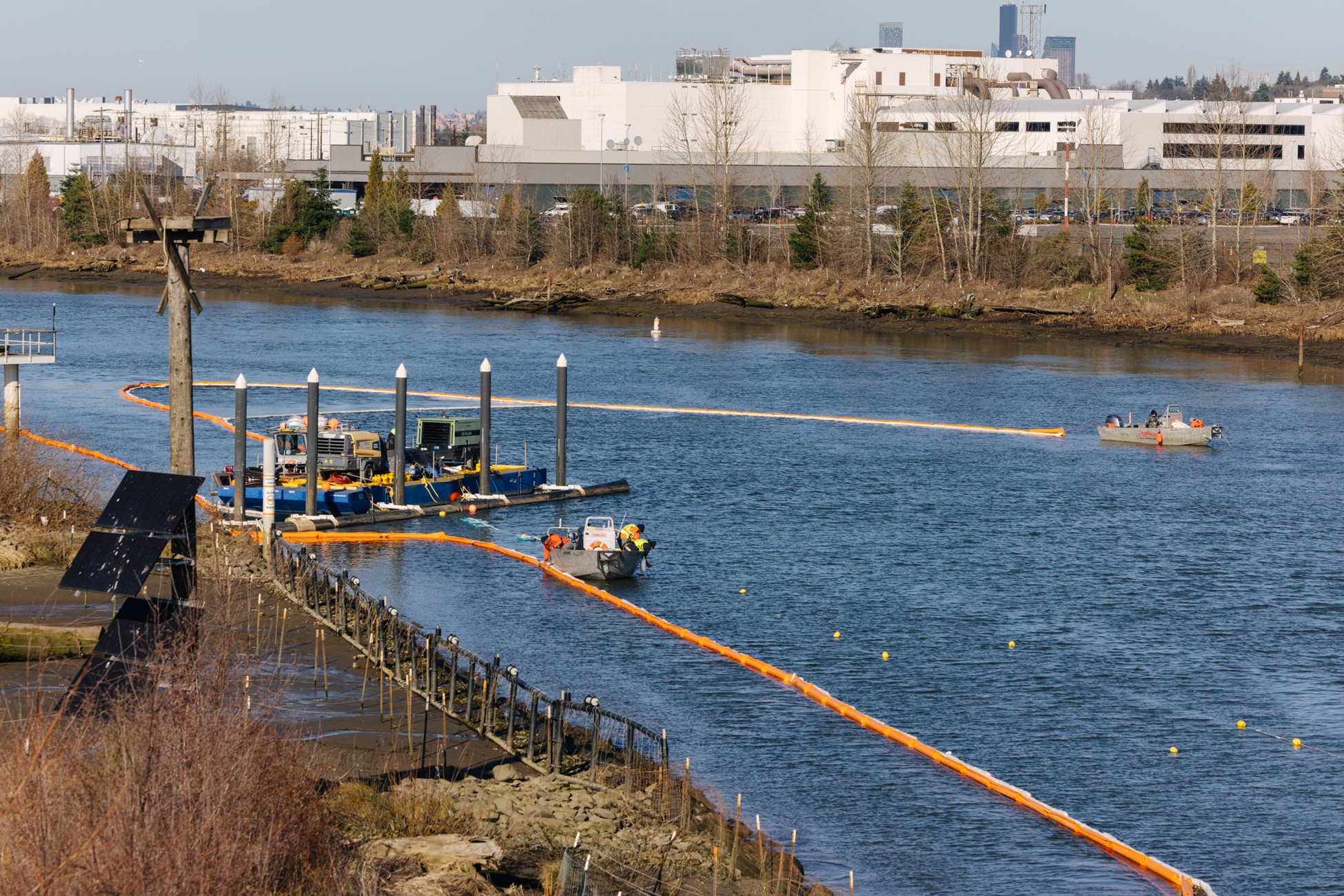
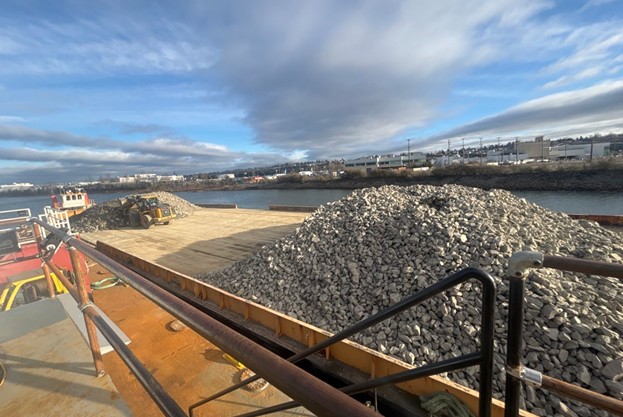
- Construction equipment working on the river, including tugboats, excavators on barges, and barges carrying material to and from work areas.
- The contractor will use barges to move dredged sediment from cleanup areas to the Duwamish Reload Facility (operated by Waste Management) located at 7400 8th Avenue South to transfer sediment from barge to railcars. The material will then be transported to a regulated landfill.
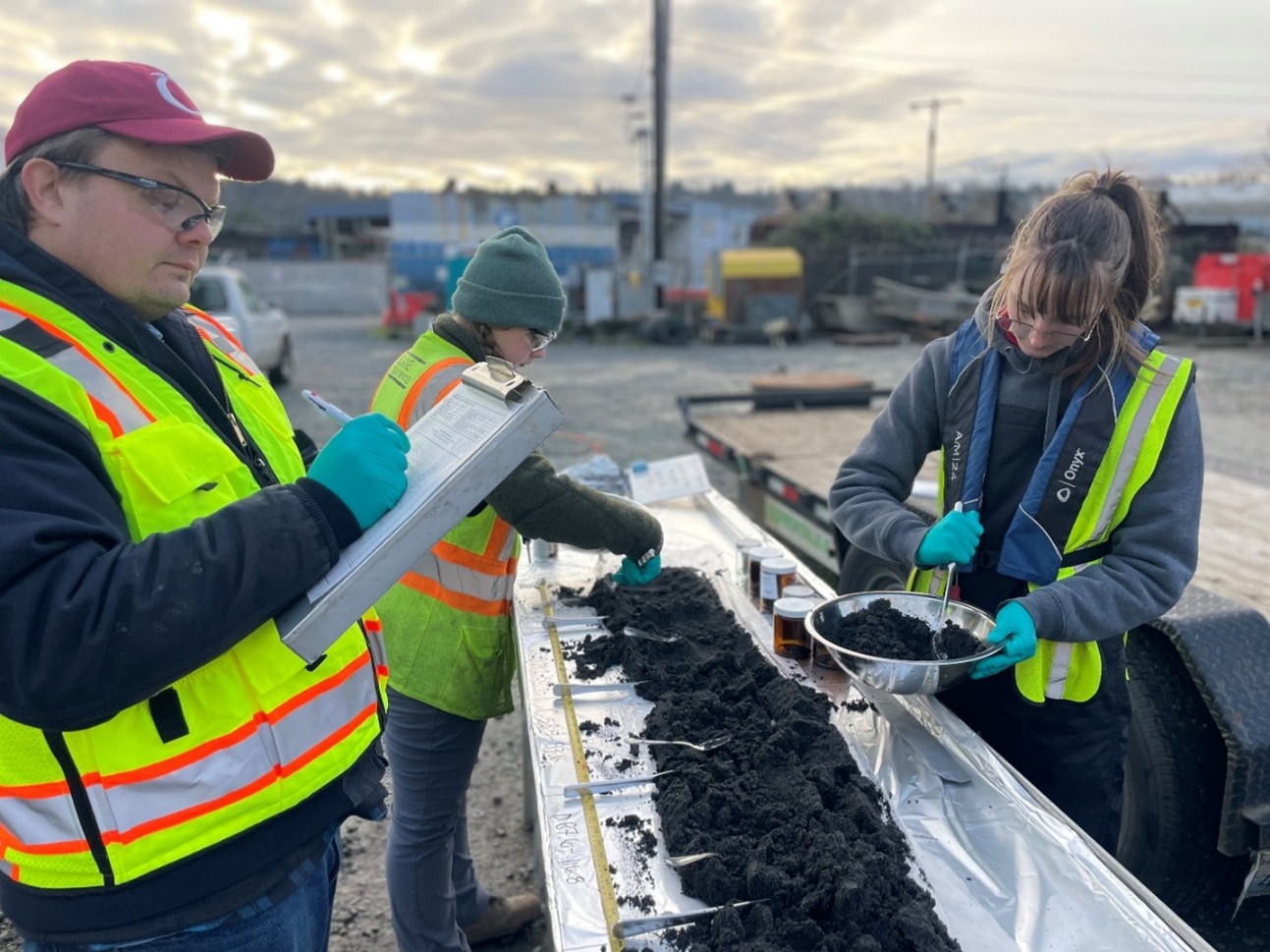
- People in smaller boats observing, doing surveys, monitoring water quality, and collecting samples.
- Lights for safe work during dark hours and noise related to construction equipment.
- Construction happening during both daytime and nighttime hours, with schedules shifting based on tides and the type of work being conducted.
Construction photos
About the Construction
King County, as a member of LDWG, hired Pacific Pile and Marine as the lead contractor to carry out cleanup construction in the upper reach.
Construction in the upper reach is taking place during the construction season over three years, ending in February 2027. The construction season is typically October through February each year. In-water construction activities are restricted to these months to protect certain fish species.
Since fall 2024, LDWG has removed nearly 80,000 cubic yards of contaminated sediment from the waterway, filling 1,129 railcars. In total, 17 of the 26 sediment management areas are now complete following Season 2.
After the Lower Duwamish upper reach cleanup is complete, construction will continue downstream toward the south end of Harbor Island over the next decade. You can read more about the pollutants we will clean up from the river on our About the Contamination page.
Learn more about the Lower Duwamish Waterway Superfund Site cleanup on the EPA website.
Planned Construction Activities
You can expect the following construction activities:
- Staging of equipment and materials: Setting up, organizing, and storing materials before use in construction.
- Offloading: Transferring materials like dredged sediment from one mode of transportation to another, such as from a barge to a truck or train.
- Transporting materials: Transporting dredged materials and debris from one location to another, including by barge, rail, or truck.
- Disposing of contaminated materials: Disposing of contaminated materials at a permitted commercial landfill.
- Surveying and inspections: Documenting the condition of the work sites and surrounding areas, as well as the progress of construction before, during, and after construction (including taking photographs).
- Removing piling and debris: Temporarily removing the piling that supports Tribal fishing, removing piles no longer in use, and removing any debris from dredged areas.
- Installing replacement piling and reinforcing structures: Replacing any Tribal fishing piling that are temporarily removed for construction access. Reinforcing any shoreline bulkheads to allow dredging next to the bulkhead.
- River sampling: Collecting water samples to confirm that dredging is being conducted as required, to comply with water quality standards.
- River sediment sampling: Collecting sediment samples to confirm dredging has removed the contaminated sediment as required.
- Site cleanup and demobilization: Removing construction equipment and materials from the work site.
Communications and construction timeline for the Upper Reach
Timeline overview from 2024 to 2027:
- Contracting and Bid: Q1 2024 – Q2 2024
- Contractor hired: Q3 2024
- Construction Submittals: Q3 2024
- Pre-construction Outreach: Q3 2024
- Construction Season 1: Q4 2024 – Q1 2025
- Construction Season 2: Q4 2025 – Q1 2026
- Construction Season 3: Q4 2026 – Q1 2027
- Ongoing Community Outreach and Communications: Q4 2024 – Q1 2027
How EPA, LDWG, and the contractor will work to reduce the impact of cleanup construction on the community.
LDWG and the construction contractor, with the oversight of the EPA, will work to learn about and mitigate community concerns as practical through digital and in-person outreach such as responding to project emails and the project phone line, and by speaking with people at community events.
We are dedicated to limiting the impacts of construction on those who work, live, play, and gather in the area.
We welcome the community to contact the Cleanup Outreach Team with any concerns related to the cleanup. You may reach us via email at info@ldwg.org or by phone at 1-888-561-LDWG.
Resources
- Season 3 Construction Flyer (Fall 2026)
- Season 3 Construction Flyer Spanish | Season 3 Construction Flyer Khmer | Season 3 Construction Flyer Vietnamese
- Green Remediation factsheet (Fall 2024)
- Environmental and Community Protection factsheet (Fall 2024)
- Short video, Start of Construction (December 2024)
- Joint News Release, Start of Construction (December 2024)
- Community Outreach and Communications Plan (January 2024)
- Community Impacts Mitigation Plan (September 2024)
- Community Outreach and Communications Plan with Community Impacts Mitigation Plan: COCP/CIMP Summary (July 2024)
- Khmer COCP/CIMP Summary | Vietnamese COCP/CIMP Summary | Spanish COCP/CIMP Summary
- Sediment Cleanup Construction Handout (September 2024)
- Khmer Sediment Cleanup Construction Handout | Vietnamese Sediment Cleanup Construction Handout | Spanish Sediment Cleanup Construction Handout